When property owners consider installing a well, one of the first questions is: “Should we drill a bedrock well or install a shallow well?”
The answer depends on site geology, water demand, budget, and long-term goals.
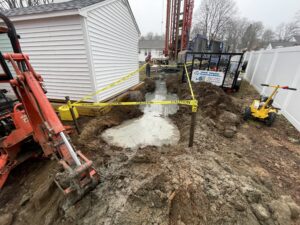
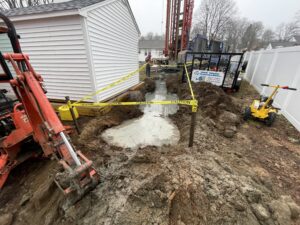
Shallow Wells
As illustrated in our Commercial Planning Guide, shallow wells draw water from saturated sand and gravel layers near the surface.
They:
- Are typically less expensive
- Require lighter equipment
- Can be installed more quickly
- May produce excellent yields under the right soil conditions
However, shallow wells depend heavily on water table levels and soil composition.
Bedrock (Artesian) Wells
Bedrock wells are drilled deep into solid rock until the borehole intersects natural fractures that carry groundwater Commercial Planning Guide.
They:
- Are deeper and more complex
- Use submersible pumps
- Offer more drought-resistant water supply
- Require larger drilling rigs
The yield depends entirely on intersecting water-bearing fractures.
Which Should You Choose?
The real question is not preference—but feasibility.
If site conditions allow for a productive shallow well, it may offer lower upfront cost and reduced risk. If not, a bedrock well may be necessary.
A Smart Approach
Experienced contractors often recommend site inspection, soil sampling, or geophysical testing before making a decision. Choosing the correct well type from the beginning can save tens of thousands of dollars.